Bhutan has long measured success not by GDP alone, but by Gross National Happiness (GNH). This philosophy permeates the tourism sector, shaping high-value, low-impact travel — an approach that ensures visitors enjoy rich experiences while leaving minimal footprint.
Walking the Trans Bhutan Trail, entering living dzongs, participating in archery matches, or lighting butter lamps exemplifies the balance between immersion and respect. Here, luxury meets responsibility in ways the world can learn from.
Principles of High-Value, Low-Impact Travel
1. Minimal Footprint, Maximum Connection
Visitors move deliberately, experiencing culture, rituals, and landscapes without overwhelming communities or ecosystems.
- •Selective Trail segments ensure concentration of experiences rather than mass footfall.
- •Village-based homestays provide direct economic support while controlling visitor numbers.
2. Economic Equity and Community-Based Tourism
Bhutan ensures that tourism benefits local people directly:
- •Artisan workshops and guided cultural activities allow travellers to support traditional skills.
- •Lodges and homestays on or near the Trail channel revenue into local economies.
- •Travel agents can highlight these ethical practices to clients seeking meaningful travel investments.

An artisan carves an art piece
3. Cultural Preservation as Core Value
Every visitor is a guest in a living culture:
- •Dzongs remain active centers of governance and spirituality.
- •Festivals, rituals, and community archery are observed with guidance to ensure respect.
- •Butter lamp ceremonies are shared authentically, not staged for tourism.
Travel here is participatory, not performative, reinforcing the ethos of conscious luxury.
4. Policy-Driven Sustainability
Bhutan has embedded tourism policy into its sustainable vision:
- •Sustainable Development Fee (SDF): A daily fee ensures funds go to infrastructure, conservation, and community projects.
- •Visitor quotas and permit regulations prevent overcrowding, especially along the Trans Bhutan Trail.
- •Environmental standards for lodges and itineraries ensure ecological harmony.
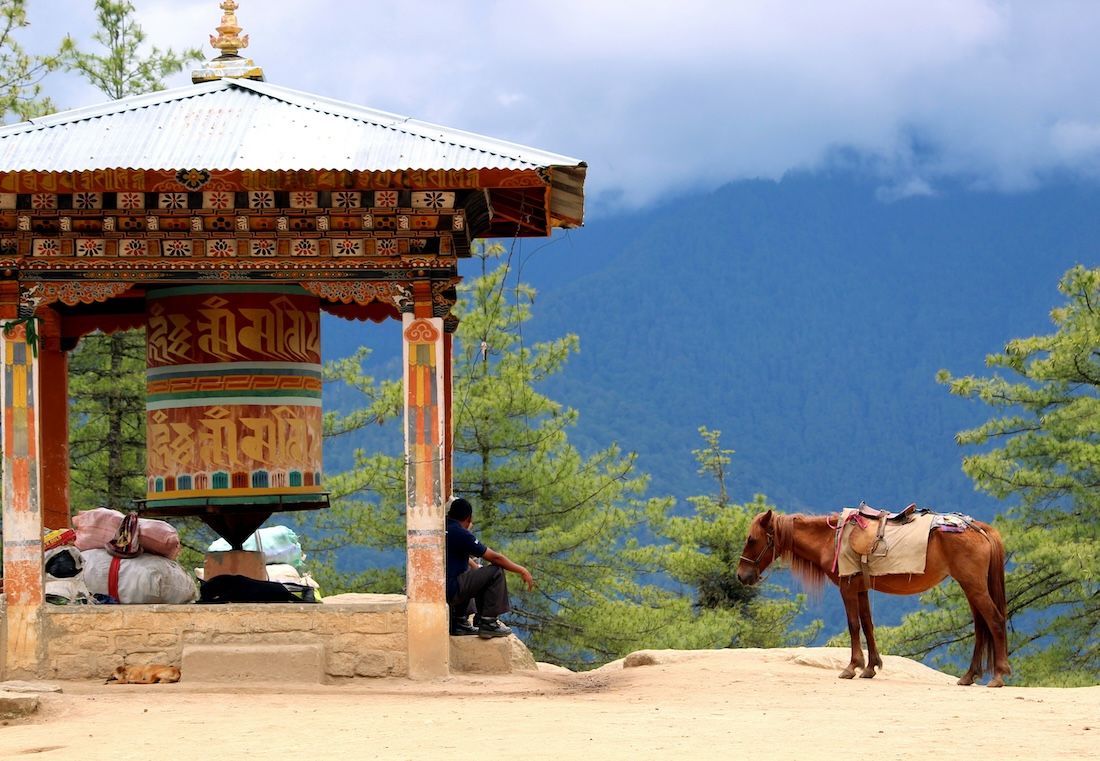
A horse rider takes a break by a prayer wheel in Bhutan
Transcend Journeys' Expertise
At Transcend, we transform these principles into actionable experiences:
- •Curated Trail segments that maximize cultural and natural immersion while minimizing environmental impact.
- •Ethical inclusion of dzongs, archery sessions, and rituals that connect travellers to Bhutanese heritage respectfully.
- •Seamless integration of conscious luxury principles — comfort, immersion, and sustainability in perfect balance.
This approach ensures travel agents can confidently offer journeys that are meaningful, responsible, and luxurious — aligning with modern client values.

A resort in Punakha displaying local architecture
Why Travel Agents Should Take Note
Bhutan is a case study in responsible tourism:
- •Guests gain authentic cultural experiences while supporting conservation and communities.
- •The Trail and village interactions become storytelling opportunities for clients.
- •Policies like the SDF ensure travel is sustainable, measurable, and marketable as high-value, low-impact travel.
Agents can confidently position Bhutan as luxury with purpose — a destination where conscious travellers leave enriched, not depleted.
Your Clients' Journey Includes:
- Guided Trail walks through scenic and historic segments.
- Visits to living dzongs and artisan villages.
- Private archery sessions and participation in rituals such as butter lamp ceremonies.
- Experiences designed around conscious luxury and Bhutan's happiness philosophy.